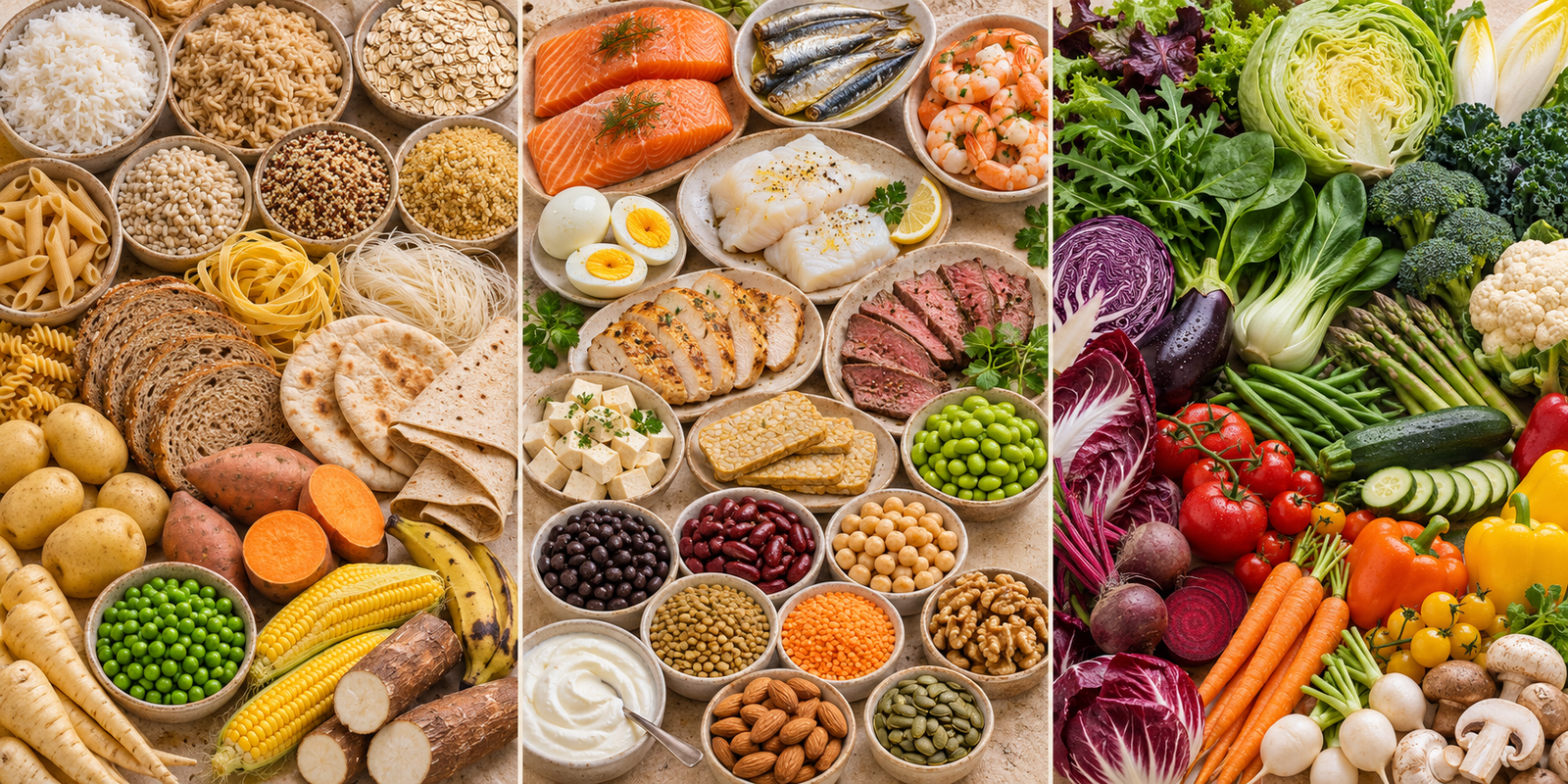
By Ocean, Mindwave Body
When people decide to cut back on carbohydrates, bread is often the first thing they think of. But what if lunch is a jacket potato with sweetcorn on the side? Both supply starch, just as bread and rice do. Then there are foods such as chickpeas and lentils, which provide both carbohydrate and protein. Once you know where these everyday foods fit, it’s easier to put a meal together and make sense of advice about which foods to eat first.
Which Foods Count as Carbohydrates?
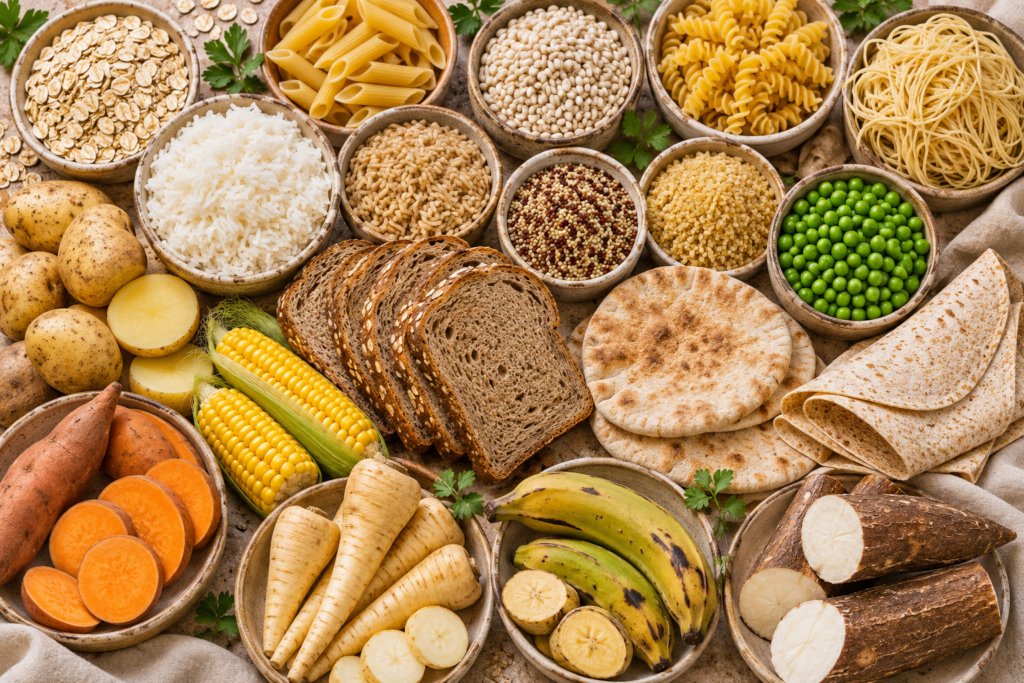
Carbohydrates include starches, sugars and fibre. When we talk about the carbohydrate portion of a savoury meal, we’re usually thinking about the foods that provide most of its starch. That can be rice, pasta or bread, but it can just as easily be a potato, a cob of sweetcorn or a side of garden peas.
- Rice and other grains — white rice, brown rice, oats, barley, bulgur, quinoa, couscous and polenta.
- Bread, pasta and noodles — toast, wholemeal bread, pitta, wraps, chapatis, crackers, spaghetti, rice noodles and rice cakes.
- Starchy vegetables and similar foods — potatoes, sweet potatoes, sweetcorn, garden peas, parsnips, yams, cassava and plantain.
- Pulses that also supply protein — chickpeas, lentils, black beans, kidney beans, butter beans and split peas.
- Foods with naturally occurring sugars — whole fruit, plain milk and plain yoghurt.
- Common sources of free sugars — sugary drinks, sweets, biscuits, cakes, sweetened yoghurt, honey, syrups, fruit juice and smoothies.
The easiest foods to overlook are the ones that also count as vegetables. Sweetcorn and garden peas can be part of your vegetable intake, and both contribute starch to a meal. Green beans and broccoli generally contain less starch and fit into the non-starchy vegetable part of the plate. So if you’re having chicken with roast potatoes and sweetcorn, you already have two sources of starch before you add a bread roll. That’s where recognising the foods becomes more useful than simply deciding to give up bread. CDC – Carb Choices
Start with higher-fibre swaps you actually enjoy. Choose brown rice in place of white rice sometimes, try wholewheat pasta, or use wholemeal flour in place of some of the white flour in a recipe. When buying bread, check the ingredients for wholemeal flour. A dark loaf’s colour alone tells you little about its wholegrain content. Keeping the skin on a baked potato is another simple way to get more fibre. As for portions, look at what else is on the plate. If you want both rice and bread with a meal, you can serve a little of each. Starchy foods are an important part of the NHS Eatwell Guide, and there’s room for them in a balanced diet. NHS – Starchy foods and carbohydrates
What Does Sugar Have to Do With Collagen and Breakouts?
The NHS recommends that adults have no more than 30 grams of free sugars a day. Free sugars include sugars added to food and drinks, along with those in honey, syrups, fruit juice and smoothies. The naturally occurring sugars in whole fruit and plain milk fall outside that category. This is why a glass of fruit juice and a whole apple are counted differently. NHS – Sugar: the facts
The connection between sugar and skin ageing involves glycation, a process in which sugars react with proteins such as collagen. This can form compounds called advanced glycation end products, or AGEs. Some AGEs create additional links between collagen fibres, making them stiffer and potentially affecting how readily the skin springs back. The research points to changes in how collagen behaves. How much cutting back on dietary sugar affects collagen thickness or visible wrinkles in healthy adults is still uncertain. Review – Advanced glycation end products in the skin
Healthy circulation delivers oxygen and nutrients to the skin. The theory that eating chocolate makes your blood “sticky” and causes spots doesn’t explain what acne studies have found. Some studies suggest that eating fewer foods that raise blood glucose rapidly may help some people with acne. Chocolate is harder to pin down because products vary in their cocoa, sugar and milk content, and acne has several contributing factors. American Academy of Dermatology – Diet and acne

Which Foods Are Good Sources of Protein?
- Fish and seafood — salmon, sardines, mackerel, cod, tuna and prawns.
- Eggs, poultry and meat — eggs, chicken, turkey, lean beef, lamb and pork.
- Soya foods — tofu, tempeh and edamame.
- Beans and other pulses — black beans, kidney beans, butter beans, chickpeas, lentils and split peas.
- Dairy, nuts and seeds — plain Greek yoghurt, cottage cheese, almonds, walnuts and pumpkin seeds.
Do beans count as protein? Yes. A chickpea curry or a lentil stew can be the main protein dish at dinner. Chickpeas and lentils also supply carbohydrate and fibre, so they contribute to the carbohydrate content of the meal alongside any rice or bread you serve. And there’s a difference between black beans and green beans. Black beans are pulses that provide both protein and starch, while green beans usually go with the non-starchy vegetables. NHS – The Eatwell Guide · CDC – Diabetes Meal Planning
Which Vegetables Count as Non-Starchy?
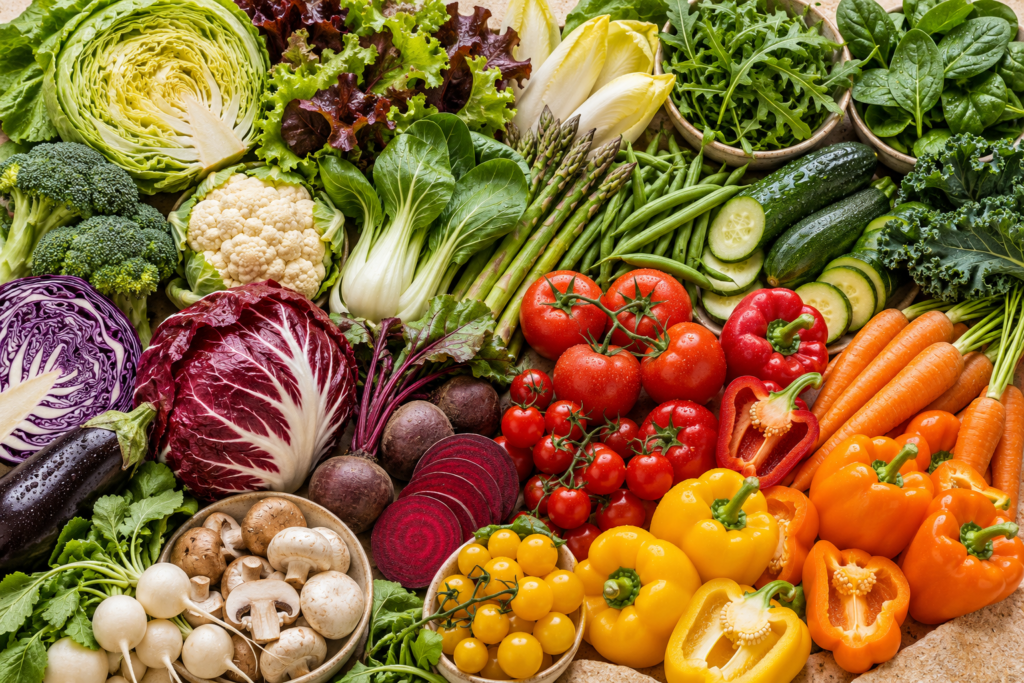
This part of the plate can be as colourful as you like. Think crisp iceberg lettuce, burgundy radicchio, purple cabbage, red tomatoes, orange carrots and yellow peppers.
- Salad leaves and greens — iceberg lettuce, rocket, spinach, kale, chard, chicory, radicchio and mixed salad leaves.
- Cabbages and related vegetables — broccoli, cauliflower, Brussels sprouts, red cabbage and pak choi.
- Vegetables for salads or roasting — tomatoes, red, orange or yellow peppers, cucumber, courgette and aubergine.
- Other sides — green beans, asparagus, mushrooms, celery, carrots, beetroot and radishes.
Non-starchy vegetables still contain some carbohydrate, including fibre. The distinction helps when you’re looking at a mixed dish. In a tray of roasted broccoli, peppers, courgettes and potato wedges, the broccoli, peppers and courgettes make up the non-starchy vegetable portion. The potato wedges provide most of the starch. CDC – Diabetes Meal Planning
How to Put This Meal Order into Practice
Start with a few bites of non-starchy vegetables, move on to the protein, and have most of the starchy carbohydrateslater in the meal. With broccoli, salmon and brown rice, start with the broccoli, move on to the salmon, then have the brown rice. For another example, start with a cucumber and tomato salad, move on to a chickpea curry, then enjoy the rice alongside the curry towards the end. With mixed dishes, you can start with a vegetable side and enjoy the rest as it’s served.
Studies in adults with type 2 diabetes suggest that eating carbohydrates later can reduce the rise in blood glucose after some meals. A recent review found a small effect on HbA1c, a measure of average blood glucose over time. The long-term benefits remain uncertain, and it’s still unclear whether changing meal order has any visible effect on skin ageing. If you’re interested in eating for your health and skin over the long term, knowing what’s on your plate is a practical first step. You can choose higher-fibre carbohydrates more often, keep an eye on free sugars and try the meal order with foods you already enjoy. Systematic review – Nutrient intake order in type 2 diabetes
Related reading
What Do Blood Sugar Spikes Have to Do With Wrinkles and Grey Hair?
Sources
- NHS – The Eatwell Guide
- NHS – Starchy foods and carbohydrates
- NHS – Sugar: the facts
- CDC – Carb Choices
- CDC – Diabetes Meal Planning
- Advanced Glycation End Products in the Skin – Review
- American Academy of Dermatology – Can the right diet get rid of acne?
- Diet and Acne – Systematic review
- Nutrient Intake Order on Metabolic Outcomes in Type 2 Diabetes – Systematic review and meta-analysis
Leave a Reply