
I used toner for years without really questioning whether I needed it. It was simply part of my skincare routine — cleanse, toner, serum, moisturiser.
But as I started paying more attention to my facial redness, I began to wonder whether every step in my routine was actually helping my skin. Toner was one of the first things I questioned.
Do we really need toner after cleansing? And if you have sensitive or redness-prone skin, could this extra step sometimes be doing more harm than good?
What Is Toner Actually For?
Toner has traditionally been used after cleansing to remove any remaining residue and prepare the skin for the next steps in a skincare routine. Older toners were often more astringent and were designed to remove excess oil and leave the skin feeling very clean.
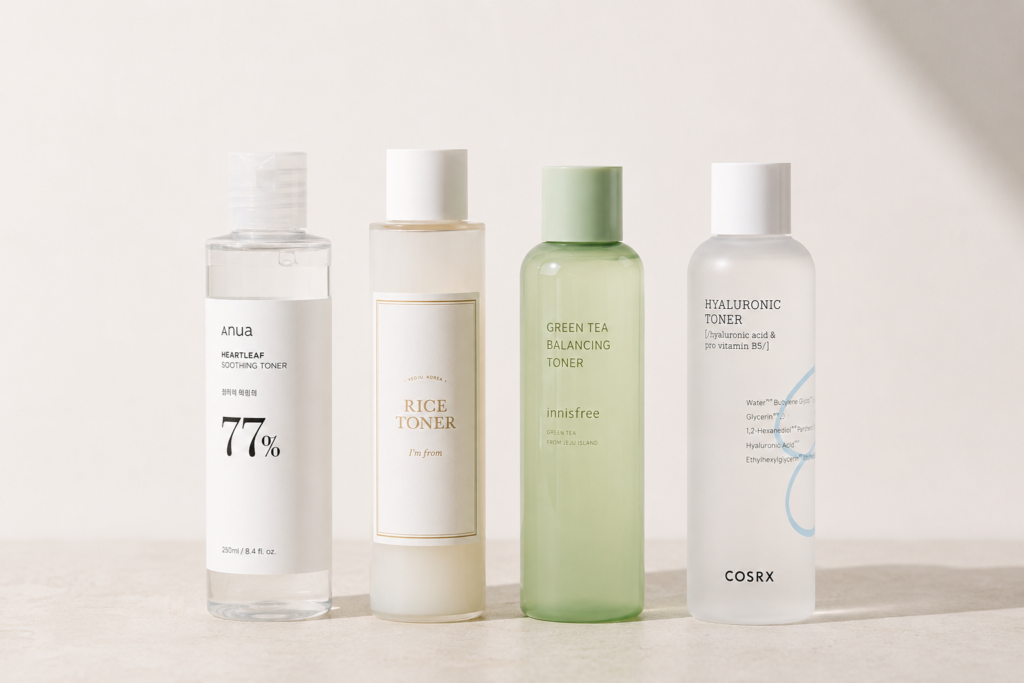
But skincare has changed. Many modern facial cleansers are formulated to cleanse the skin without stripping it, and today’s toners can serve very different purposes. Some focus on hydration, while others contain exfoliating acids or ingredients intended to target specific skin concerns.
This made me question something I had never really thought about before: if my cleanser is already doing its job, what exactly am I asking my toner to do?
Do You Actually Need Toner After Cleansing?
One of the reasons toner became such a familiar step in skincare was the idea that it could help restore the skin after cleansing. Traditional soaps can be alkaline, while the skin naturally maintains a mildly acidic surface.
But many modern facial cleansers are formulated to be much gentler and closer to the skin’s natural pH than traditional soap. If you are already using a gentle, pH-balanced cleanser, adding a toner simply to “rebalance” your skin may not be necessary.
That doesn’t mean toner has no purpose. A hydrating toner may add moisture, while other formulas contain active ingredients for exfoliation or specific skin concerns. But it does mean that toner isn’t an essential step for everyone.
For me, that was an important distinction. I had always treated toner as something that automatically belonged between cleansing and serum, rather than asking whether my skin actually needed it.
What About Sensitive or Redness-Prone Skin?
This is where I started paying much more attention. If your skin is already sensitive or prone to redness, adding more products doesn’t necessarily mean giving your skin more care.
Some toners contain ingredients that may be irritating for sensitive skin, particularly formulas with alcohol, fragrance, astringents or exfoliating acids. Even products marketed as gentle or hydrating may not work equally well for everyone.
I also realised that the toner itself may not be the only thing to consider. How we apply it matters too.
If your skin becomes red easily, repeatedly wiping it with a cotton pad adds another source of friction to a routine that may already include cleansing, drying and applying several other products.
This made me wonder whether, for redness-prone skin, sometimes the gentler approach is simply to do less.
Do You Need a Cotton Pad to Apply Toner?
I had always associated toner with a cotton pad: pour the toner onto the pad and wipe it across the face. I never really questioned whether that step was necessary either.
For sensitive or redness-prone skin, however, the repeated wiping can create unnecessary friction. The pressure may feel very light, but it is still another form of physical contact with skin that may already be easily irritated.
If you enjoy using a hydrating toner and it works well for your skin, a cotton pad isn’t always necessary. You can pour a small amount into clean hands and gently press or pat it onto the skin instead.
This also made me rethink what I was trying to achieve by wiping my face with toner. If I had already cleansed properly, did I really need to “clean” my skin again with a cotton pad?
For sensitive skin, I’m beginning to think that less rubbing and fewer unnecessary steps may sometimes be more useful than adding another product.
So, Should You Stop Using Toner?
Not necessarily. Toner isn’t automatically bad for your skin, and there are plenty of hydrating and soothing formulas that some people enjoy using without any problems.
The bigger question is whether your skin actually benefits from it.
If your toner has a specific purpose, feels comfortable on your skin and doesn’t cause dryness, stinging or increased redness, there may be no reason to stop using it. But if you have sensitive or redness-prone skin, it may be worth questioning whether toner is adding something useful to your routine — or simply adding another opportunity for irritation.
I’ve decided to take toner out of my routine for now and pay attention to what happens to my skin. Rather than assuming that more skincare means better skincare, I want to see whether simplifying my routine makes any difference to my redness.
Sometimes the most useful skincare question may not be “What should I add?” but “Do I actually need this?”
Sources
- American Academy of Dermatology — 7 Rosacea Skin Care Tips Dermatologists Recommend
- Cleveland Clinic — Do You Need a Face Toner?
- PubMed — The Relation of pH and Skin Cleansing
Leave a Reply