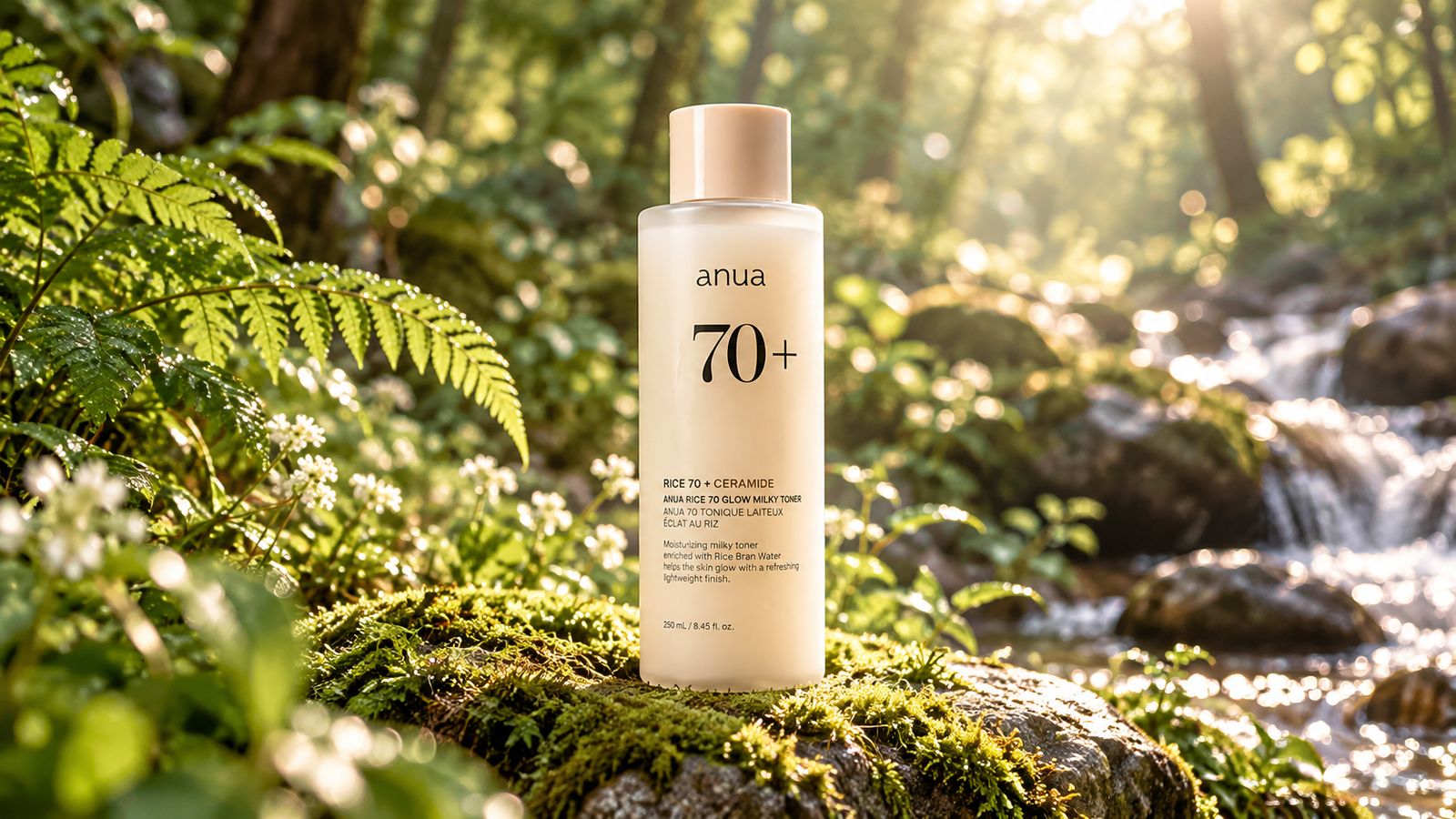
Rice-based skincare has always sounded gentle to me. When I chose Anua Rice 70 Glow Milky Toner, I expected it to be a soothing, hydrating addition to my routine — especially because my skin is prone to redness. But after using it, I noticed something I wasn’t expecting. My skin seemed to stay pink.
What I Noticed
I can’t say that the toner made my face turn red immediately after applying it. My skin naturally becomes slightly pink after cleansing. Washing, rinsing and touching my face are enough to bring out some temporary redness, so judging a skincare product based on how my face looks immediately after cleansing wouldn’t be very meaningful for me.
What caught my attention was the following morning. Normally, my complexion looks much calmer when I first wake up. The temporary pinkness from cleansing the night before has usually disappeared, and this is often when my skin looks its palest and most settled.
While I was using this toner, I began noticing that the pink tone seemed to remain into the next morning. It wasn’t a dramatic reaction. I didn’t experience intense burning or an obvious rash. My skin simply didn’t seem to return to its usual calm baseline. After noticing the same pattern, I began wondering whether the toner might not be as suitable for my particular skin as I had expected.
What’s Actually in This Rice Toner?

Anua Rice 70 Glow Milky Toner ingredient list
Looking at the formula made the experience even more interesting because, on paper, this doesn’t look like an obviously harsh product.
Anua Rice 70 Glow Milky Toner contains rice bran water along with ingredients commonly found in hydrating and barrier-supporting skincare. The formula includes glycerin, niacinamide, panthenol, hyaluronic acid and ceramides, among other ingredients.
It is also fragrance-free. In other words, there wasn’t an obvious ingredient on the label that made me think, “Of course this made my skin red.” Niacinamide appears relatively high on the ingredient list, and it is an ingredient that is generally used for benefits such as supporting the skin barrier and improving uneven skin tone. Many people tolerate it very well.
But this is where skincare becomes complicated.
A good ingredient isn’t automatically a good ingredient for every person, in every concentration and in every formulation.
Was Rice the Problem?
I don’t know — and I don’t think my experience gives me enough evidence to say that it was. It would be easy to use this experience to conclude that “rice toner causes redness,” but that wouldn’t be accurate.
This toner contains many ingredients. Without controlled testing, I can’t know whether my skin was responding to one particular ingredient, the concentration of an ingredient, the overall formulation, or something else entirely. What I can describe is what I observed: while this product was part of my routine, my skin appeared to remain pinker than I was accustomed to seeing it. That’s an important distinction. This isn’t a claim that Anua Rice 70 Glow Milky Toner causes redness in everyone. It’s an account of how my own redness-prone skin appeared to behave while I was using it.
“Gentle” Doesn’t Mean Every Skin Will Love It
This experience changed the way I think about products marketed or perceived as gentle. Words such as soothing, hydrating and barrier-supporting are useful when choosing skincare. But they can’t predict exactly how your individual skin will respond.
A product can have an excellent ingredient list and thousands of happy users and still not be right for your skin. For me, the most useful clue wasn’t what happened five minutes after applying the toner. It was what my skin looked like the following morning.
If you have skin that flushes easily, I think it’s worth establishing your own baseline. Notice how your skin normally looks when you wake up, before cleansing, exercise, heat and skincare have influenced it. Then, when introducing something new, change one product at a time. That makes subtle changes much easier to notice.
What I Do Differently Now
I have become much more cautious about adding products simply because they sound gentle. When I introduce something new, I try to keep the rest of my routine unchanged and observe my skin over the following days. I also don’t assume that irritation must involve burning, itching or an obvious rash. For my skin, persistent pinkness can be enough to make me stop and reconsider a product. And sometimes the solution isn’t adding another serum or cream to calm the skin. Sometimes it’s simply removing the product you recently added.
The Bottom Line
I bought Anua Rice 70 Glow Milky Toner expecting a gentle and hydrating product. The ingredient list still looks appealing to me, and my experience doesn’t mean that this is a bad toner or that other people with sensitive skin should avoid it. But my skin appeared to remain noticeably pinker while I was using it, particularly when I compared how my complexion looked the following morning with its usual baseline. I can’t identify exactly why that happened, and I don’t want to blame a particular ingredient without evidence.
What the experience taught me was much simpler:
Don’t judge skincare only by how gentle the ingredients sound. Pay attention to what your own skin repeatedly tells you.
For me, one of the best times to listen is first thing in the morning.
This article describes my personal skincare experience and is not medical advice. If you experience persistent, unexplained or worsening facial redness, consider speaking with a qualified healthcare professional.
Leave a Reply