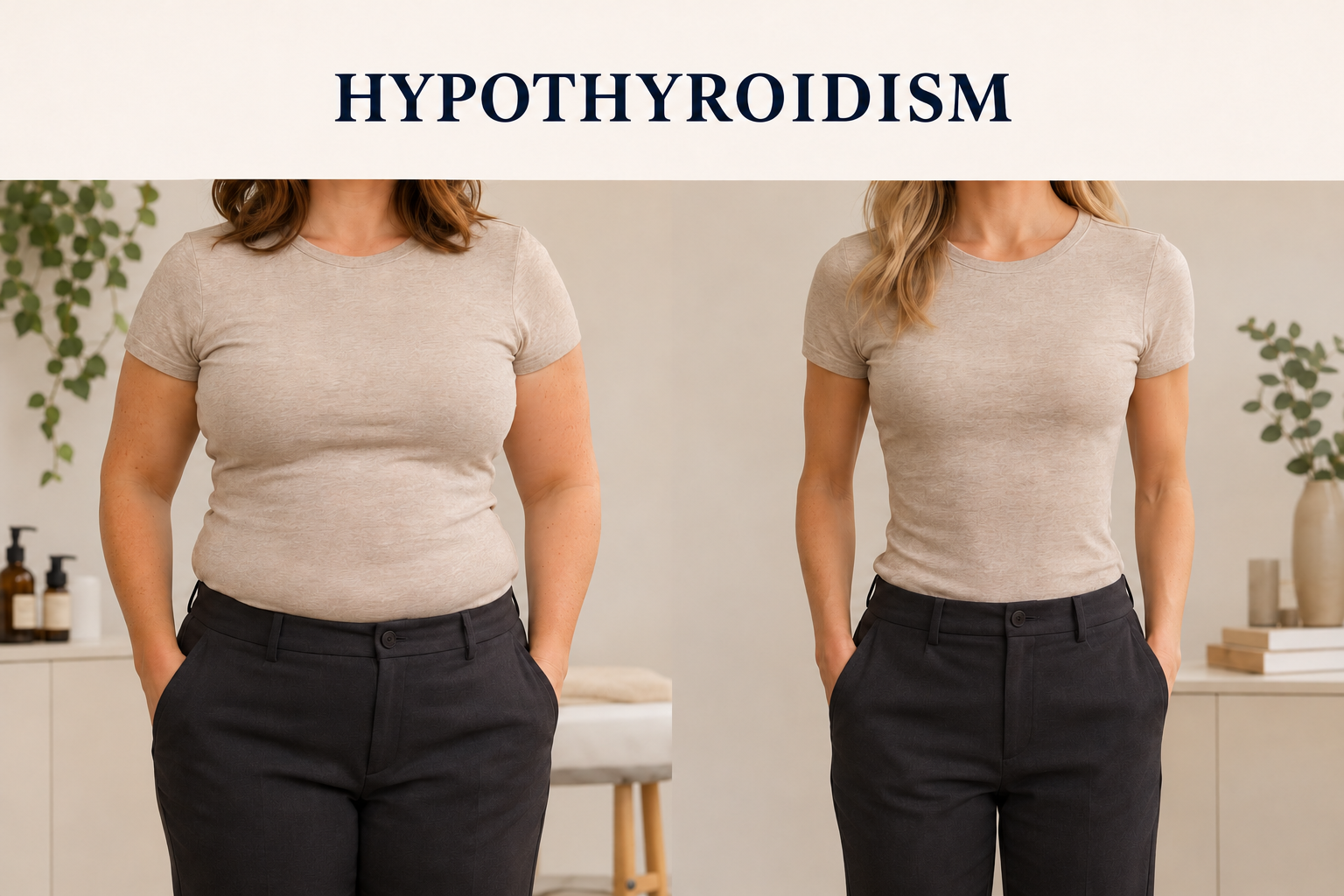
My hair was the first thing I noticed. I’d always been sensitive about how much hair I had, so when it started losing its body and my scalp became easier to see, I noticed straight away. Then my clothes started fitting differently. I felt puffy much of the time, and I remember gaining around 10 kg surprisingly quickly. I was eating less and still finding it hard to lose weight. Exercise felt like another thing to get through on a day when I already wanted to lie down.
The strangest part was being tired enough to lie down during the day, then struggling to fall asleep at night. I felt cold more easily, and my head often felt heavy and foggy. At the time I treated each thing as a separate problem. Looking back, I wish I’d told my GP about all of them together.
What does the thyroid actually do?
The thyroid is a small, butterfly-shaped gland at the front of the neck. It makes hormones that help the body regulate how it uses energy, maintains its temperature and keeps organs such as the heart and gut working at their usual pace. Hypothyroidism means the body has too little thyroid hormone. As those levels fall, you might feel colder, more tired or constipated. Thinking can feel slower, and skin and hair can become dry. The changes often creep up gradually, which makes them easy to put down to a busy life. NHS — Underactive thyroid
When your parting looks wider and your jeans feel tighter
Thinning hair can be particularly upsetting when you already have fine or sparse hair. Thyroid-related shedding often happens across the scalp, so you may notice a general loss of volume. Hair recovery can take several months after treatment. If thinning is concentrated at the crown or continues after your thyroid levels have stabilised, a GP or dermatologist can look for other causes, including female-pattern hair loss. Two things can be happening at the same time. British Thyroid Foundation — Hair loss and thyroid disorders
Weight was the change I judged myself most harshly for. An underactive thyroid can contribute to weight gain, and some of that gain comes from retaining salt and water, which helps explain the puffy feeling. The American Thyroid Association puts the usual thyroid-related gain at around 2–4.5 kg, with individual variation. The roughly 10 kg I remember is my experience, and how much of it was down to my thyroid is unclear. If your weight changes quickly, especially alongside puffiness, cold sensitivity and fatigue, tell your GP how much it changed and over what period. A difficult time losing weight tells you very little about your willpower. American Thyroid Association — Thyroid and weight
Exhausted all day, wide awake at night
I could feel worn out all afternoon and still lie awake at bedtime. Fatigue is a common feature of hypothyroidism. The research on whether an underactive thyroid directly causes insomnia is much less clear. Stress, menopausal symptoms and sleep apnoea can also disrupt sleep. For anyone already taking levothyroxine, a dose that’s too high can make it harder to sleep, especially if there are symptoms such as a racing heart, sweating or tremor. Tell your GP about the sleep problem and any recent dose changes so they can review it alongside your blood results. Review of thyroid function and sleep · NHS — Insomnia · NHS — Levothyroxine
Dry, itchy skin, and the symptom I nearly left out
My back and other parts of my body would itch. An underactive thyroid can leave skin dry, and dry skin can itch. I also noticed itching around my anus at times when I remember my TSH being higher. I mention it because it’s the kind of thing that’s easy to leave out at an appointment. Anal itching has several common explanations of its own, including skin irritation, piles and threadworms, and it isn’t a reliable sign that TSH is high. If it keeps coming back or comes with pain, bleeding or a change in bowel habits, bring it up with your GP. DermNet — Hypothyroidism · NHS — Itchy skin · NHS — Itchy bottom
What about my gums?
My gums felt inflamed, and at times I had the unsettling feeling that several teeth were a little loose. My gums seemed calmer after I started taking levothyroxine. Some studies have found an association between thyroid problems and periodontitis, a form of gum disease that can damage the tissues supporting your teeth. The findings are mixed, and I can’t tell from the timing what caused my symptoms or what made them improve. If an adult tooth is actually loose, ask for an urgent dental appointment. Review of thyroid disease and periodontitis · NHS — Gum disease
Family history, stress and the gluten question
In the UK, the most common cause of an underactive thyroid is Hashimoto’s disease. That’s when the immune system attacks the thyroid, which can gradually make it harder for the gland to produce enough hormone. Family history matters. If a parent or sibling has thyroid disease, it’s worth mentioning to your GP. Other causes include thyroid surgery, radioactive iodine treatment and some medicines. NHS — Underactive thyroid · NIDDK — Hashimoto’s disease
I was also going through a particularly stressful time when I began feeling unwell. The Japan Endocrine Society discusses severe stress as one possible trigger for underactivity to become apparent in someone who already has Hashimoto’s. That possibility is different from being able to say what caused my illness. Stress can also make sleep and fatigue worse on its own, so it belongs in the story either way. Japan Endocrine Society — Hashimoto’s disease · NHS — Insomnia
I was eating a lot of wheat noodles around the same time. I remember feeling better for a while after cutting out gluten, and I also remember going a month or two without my thyroid tablets. I can’t tell from memory whether my thyroid levels improved or what accounted for the change in how I felt. I’d heard that a Japanese doctor had shown that gluten causes hypothyroidism. I couldn’t trace that claim to a reliable original source. The Japanese physician Hakaru Hashimoto first described the thyroid inflammation that now bears his name in 1912. A 2025 review of small trials in people with Hashimoto’s who did not have coeliac disease found no clear improvement in TSH, free T4 or free T3 with a gluten-free diet. The evidence was very uncertain. Feeling better after changing what you eat is worth discussing with your GP. Keep taking your prescribed levothyroxine and discuss any dose change or trial off medication with them. Osaka University — Dr Hashimoto · 2025 systematic review of gluten-free diets in Hashimoto’s · NHS — Levothyroxine
Coeliac disease is a separate condition in which gluten triggers an immune reaction. It can occur alongside autoimmune thyroid disease. If you have autoimmune thyroid disease or keep getting symptoms such as bloating or diarrhoea, ask your GP about coeliac testing. The test can miss coeliac disease if you’ve already cut out gluten. Ask your GP how to prepare if you’re already eating gluten-free. NHS — Coeliac disease testing
Which blood tests should you ask about?
TSH is the signal the pituitary gland sends to the thyroid to ask for more hormone. Free T4 (FT4) measures the amount of the main thyroid hormone available in the blood. When the thyroid gland itself is underactive, the usual pattern is high TSH with low FT4. High TSH with FT4 still in range is called subclinical hypothyroidism. The result needs to be interpreted in context. In the UK, GPs usually start with TSH and check FT4 if it is high. Free T3 (FT3) is generally more useful when TSH is low and an overactive thyroid is suspected. The GP may also check TPO antibodies to help identify an autoimmune cause. If you take a hair supplement containing biotin, tell your GP before the test because it can distort some results. NICE — Thyroid disease assessment and management
What changed when I started treatment
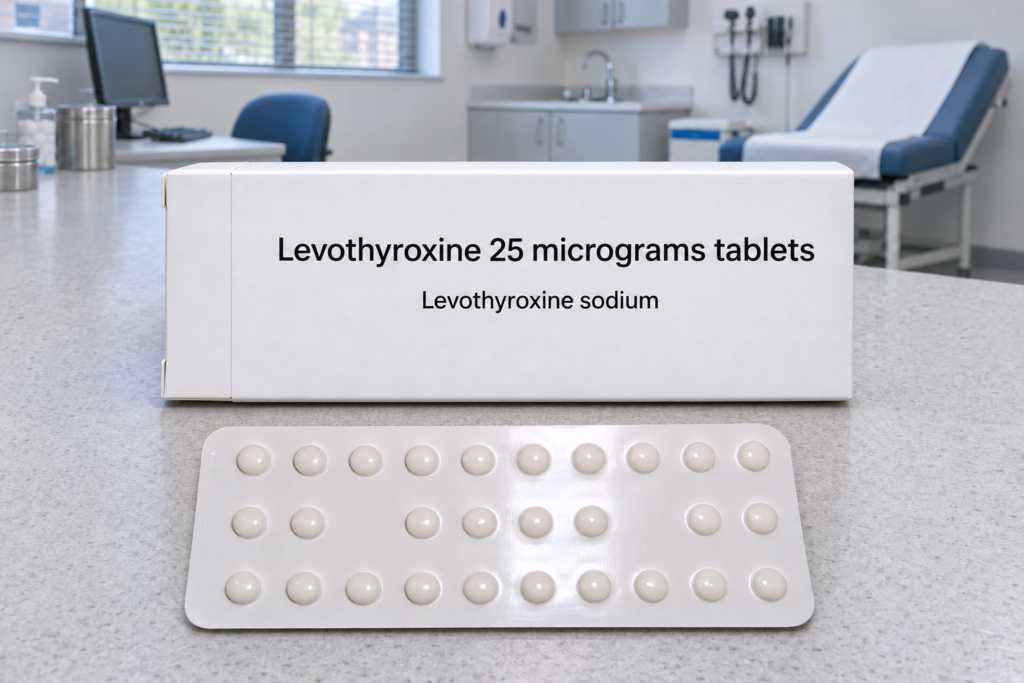
I feel better than I did when I spent so much of the day wanting to lie down. I still have days when I feel tired, and my hair is still something I pay attention to. I take my levothyroxine in the morning on an empty stomach. It’s a replacement for the T4 my body needs, and regular blood tests help my GP see whether the dose is right. If symptoms continue on treatment, it’s worth discussing them alongside your latest results so your GP can consider the dose and other possible causes. NHS — Levothyroxine · NICE — Monitoring treatment
When travelling made my medication routine harder
At home, taking my tablet before breakfast is easy to remember. Crossing time zones made it more complicated. At one point, what would usually have been my morning dose fell in the evening by local time. After I came home, my thyroid results looked worse than before. I don’t know whether the change in my routine played a part, but it was worth mentioning when reviewing my results.
I used to take 50 micrograms four days a week and 25 micrograms three days a week. My current routine is 50 micrograms Monday to Friday and 25 micrograms on Saturday and Sunday. That’s my personal schedule. Your GP can review your symptoms and blood tests and tell you exactly which strength to take on which days. If you’re crossing time zones, ask your pharmacist or GP how to fit your usual dose into local time. Check with your prescriber before changing how much you take. NHS — Levothyroxine · NICE — Monitoring treatment
If I could go back to when my hair first started thinning, I’d tell my GP about the hair, the puffiness, the cold and the nights I lay awake in the same conversation. I spent a lot of that time trying to make myself eat less. What I needed was to find out why so many things in my body had changed together.
Leave a Reply